
A Faiths for Biodiversity report for CBD COP17 · October 2026
Common
Ground
Faith partnerships for nature
Biodiversity is sustained through relationships. Its recovery will depend on them too.
Nature does not experience targets.
It experiences rivers running cleaner, species able to move, reefs given space to recover, cooler places to live, and people choosing to leave more life behind than they found.
At COP17, Parties review collective progress for the first time.
Yet most national plans don’t yet say how anyone beyond national government will help deliver them. Common Ground starts from that gap, and asks who holds the rights, knowledge, land, finance and relationships a particular place needs.
- 23 targets for 2030 in the Kunming–Montreal Global Biodiversity Framework
- 51 national plans analysed by February 2026. Fewer than half explained how actors beyond government would take part.
- ~8% of the world’s habitable land is held by faith-based organisations, on widely cited estimates
- ~5% of commercial forests, on the same estimates
These figures describe scale. Biodiversity impact has to be shown separately, and the report does.
Seven partnerships. Seven places where different capacities meet.
-
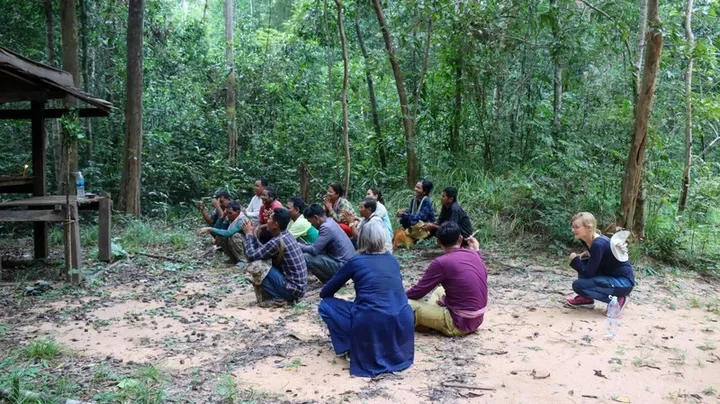
Forest monitoring built around community knowledge
Community-led, app-based monitoring began in 2015 and now spans three forest landscapes, building a continuing evidence base.
-
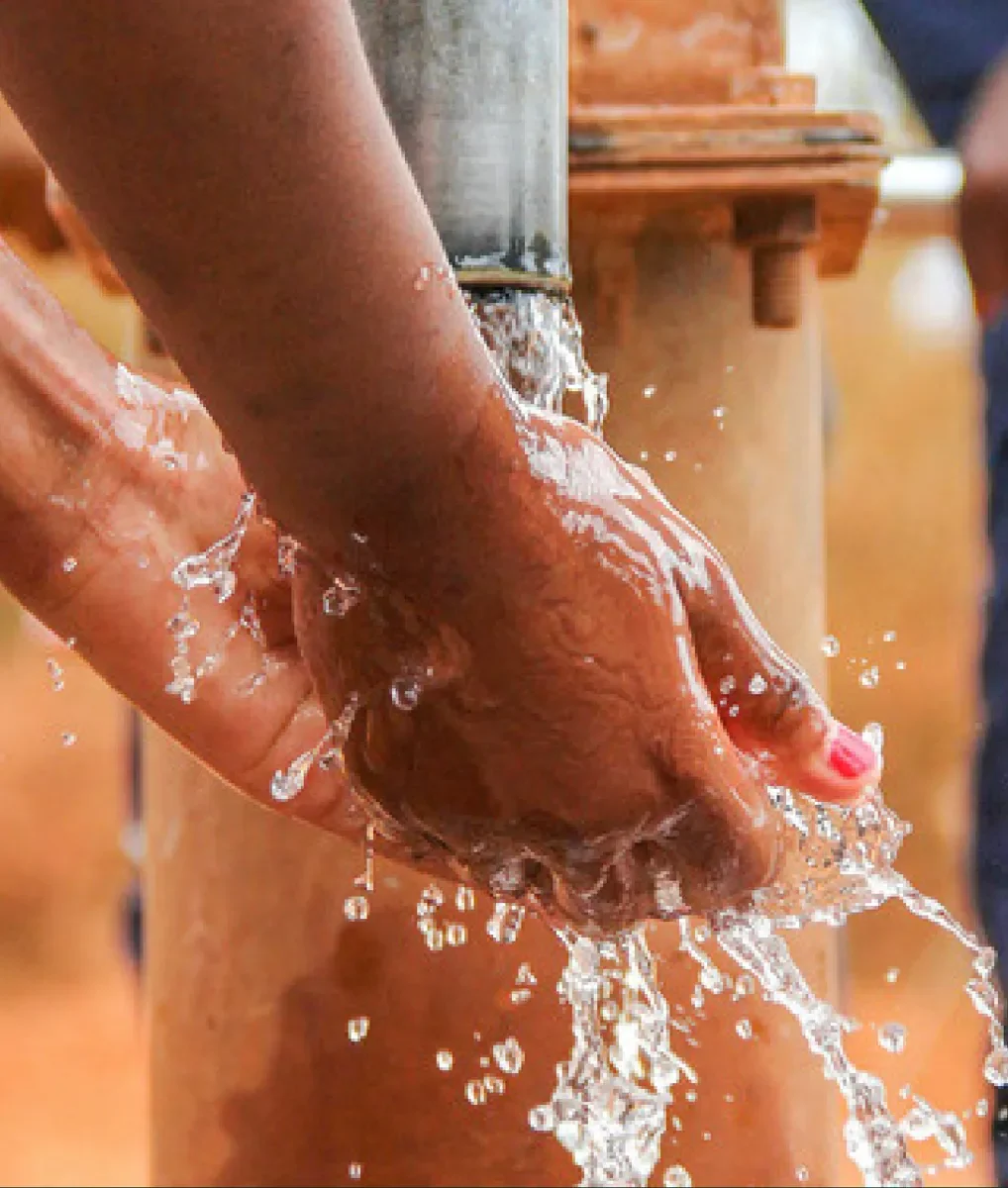
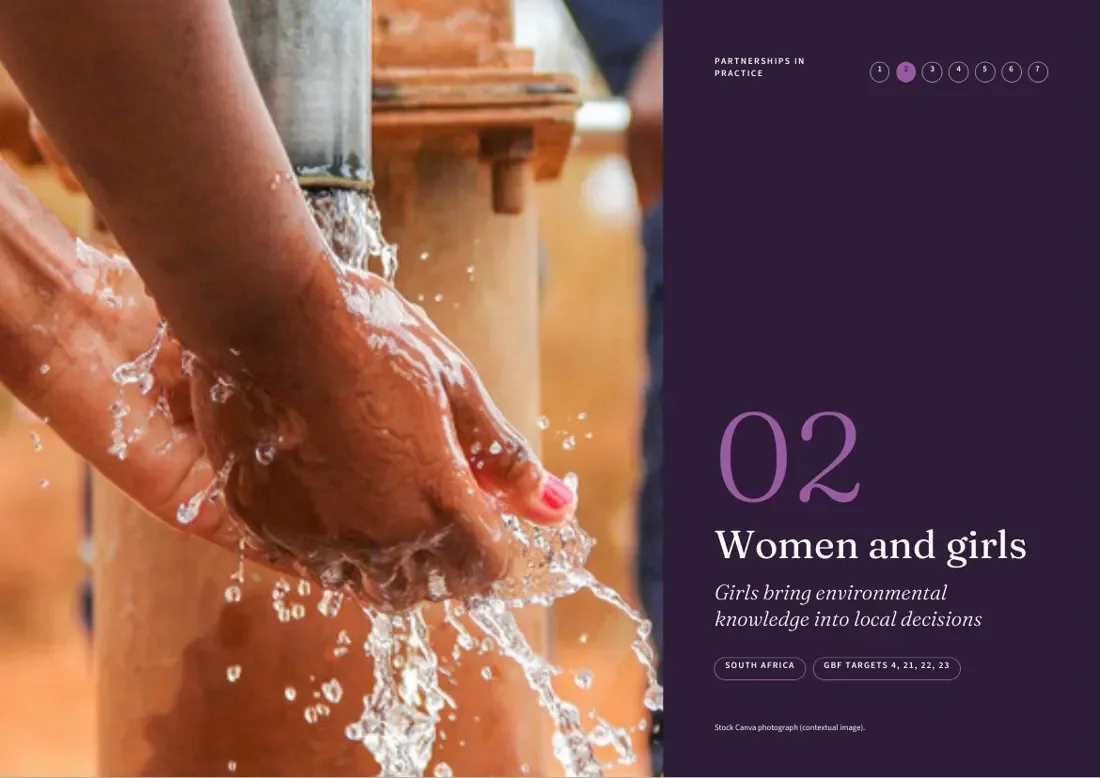
Girls bring environmental knowledge into local decisions
Girls questioned election candidates on clean water and gained invitations to local water committees.
-
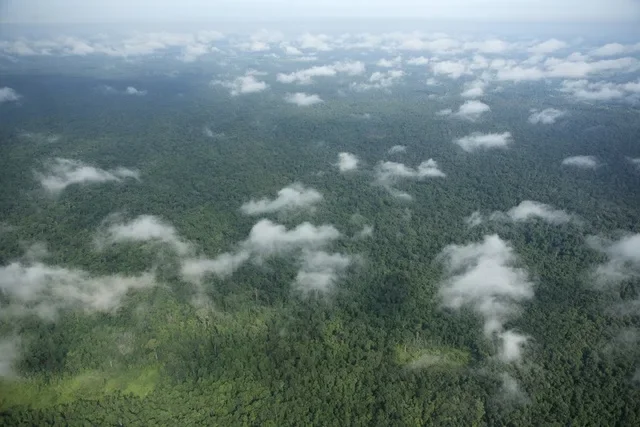
Young people connect forest experience with biodiversity learning
Young people learned about the GBF and national planning, then drew up a joint action plan with their communities.
-
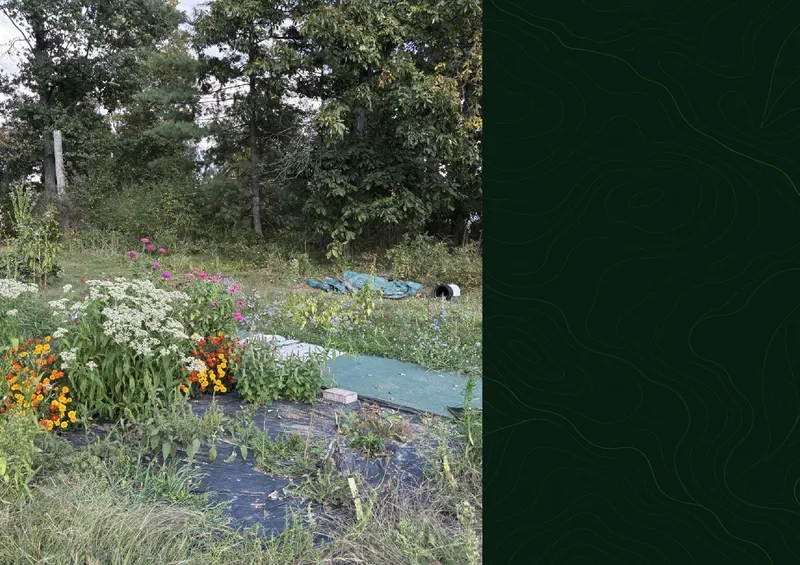
Field research that shaped how the land is managed
University research on a congregation’s land led to a 2024 management plan and 7 acres of mown land returned to forest.
-
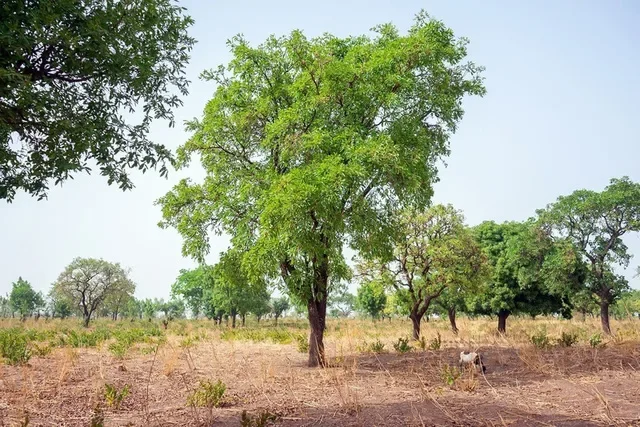
How the shea trade can help fund conservation
200,000+ indigenous seedlings across 450 hectares, with a biodiversity premium paid into a conservation fund.
-
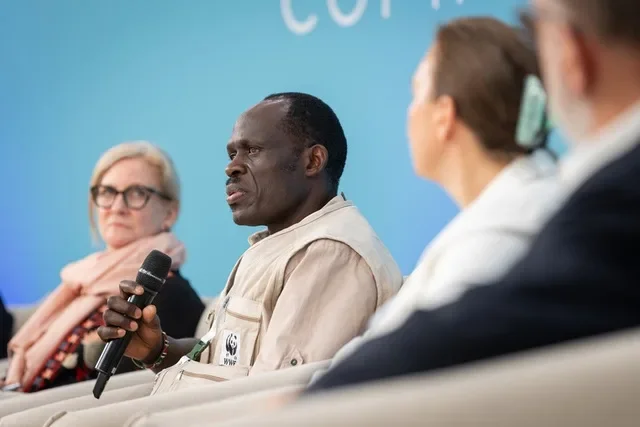
When global networks reach the places that need them
Faiths for Land now connects 900+ organisations representing 15.3 million hectares with restoration expertise and finance.
-

Enabling high ambition for the ocean
The first Faith House at a UN Ocean Conference, and a multi-faith declaration spanning seven traditions.
-
Each case separates what a partnership did, what changed, and what can honestly be said about ecological recovery.
Read all seven
Three lessons recur across every case.
-
1
Partnership works best when each partner can change something the others cannot.
A congregation that can change how its land is managed. Researchers who bring independent methods. A buyer that pays a premium into a conservation fund.
-
2
Knowledge matters when it can reach a decision.
Community monitoring and youth participation reveal what needs to change. Public authorities need a clear process for responding to them.
-
3
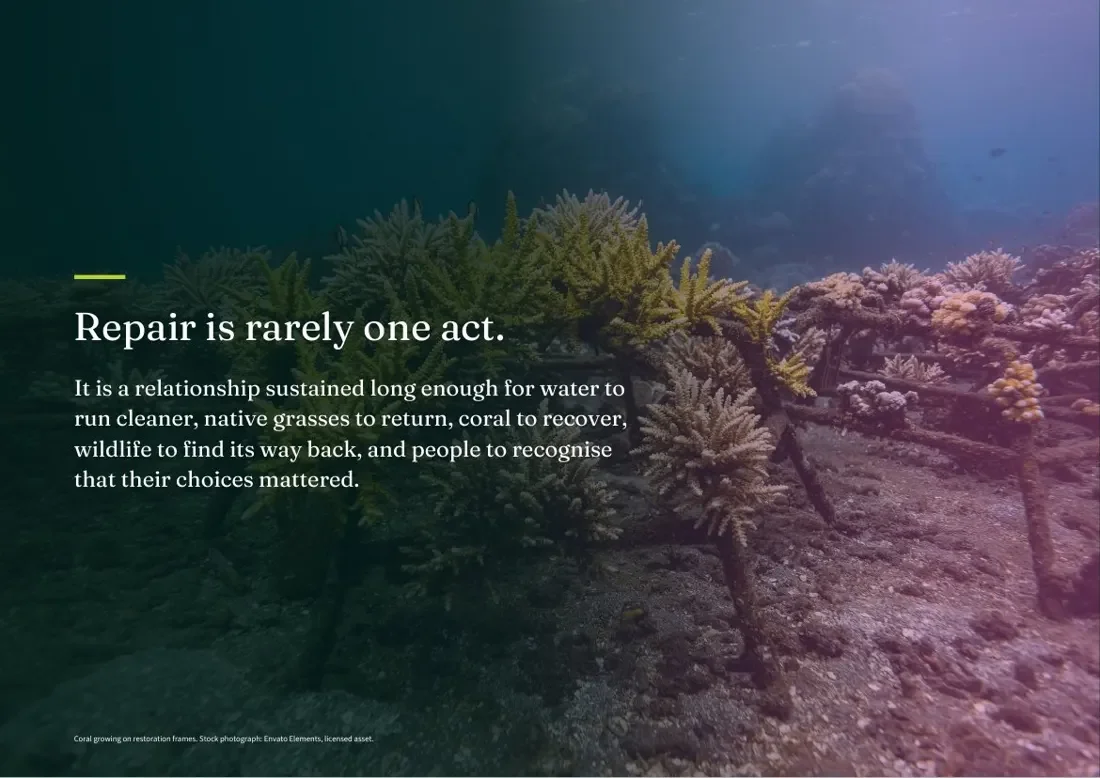
Recovery outlasts most project cycles.
Forests, rivers and reefs don’t respond on the timetable of a grant. Partnerships need the funding and continuity to return to the same places and adjust.
Inside: from cases to cooperation.
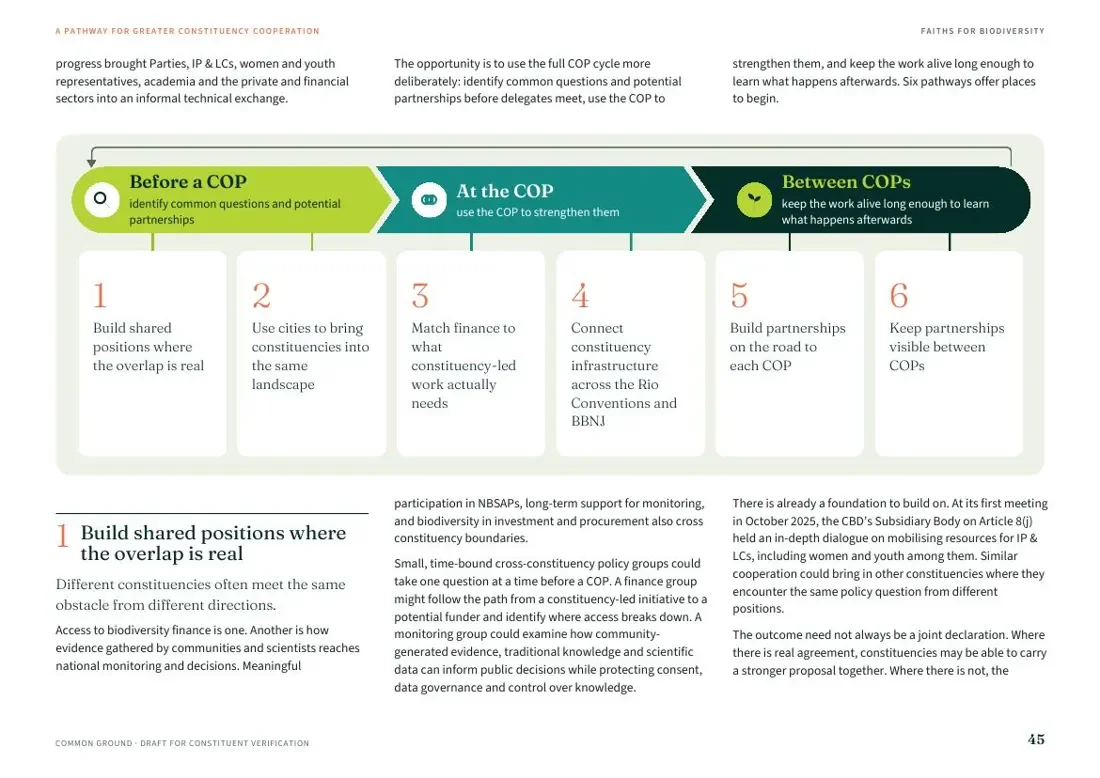
Beyond the seven cases, two practical tools for anyone working on GBF delivery: a pathway for closer cooperation between the CBD’s constituencies, and a best-practice framework for faith partnerships, from partner roles and long-term funding to the red lines that should be agreed before work begins.
- 01 Executive summary
- 02 Where global promises meet the living world
- 03 What faith institutions can bring
- 04–11 Seven partnerships in practice
- 12 A pathway for greater constituency cooperation at the CBD
- 13 A best-practice framework for faith partnerships in GBF delivery
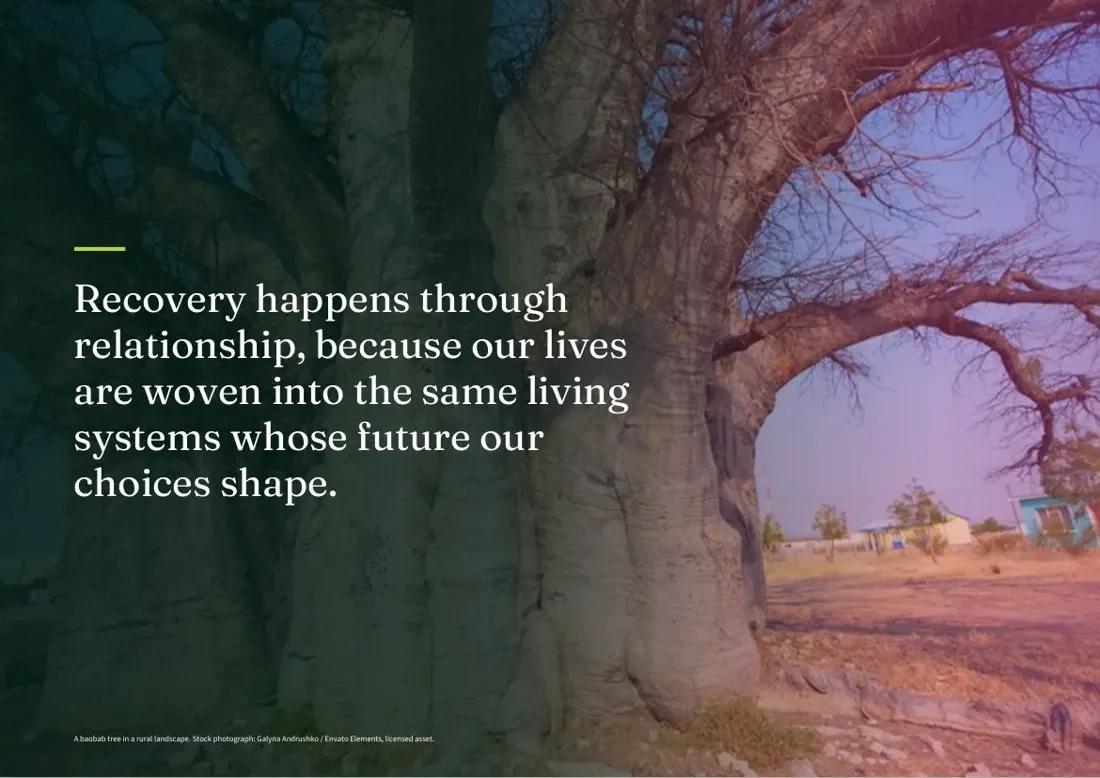
“Reach does not confer representation, and moral commitment does not substitute for ecological expertise or public authority.”
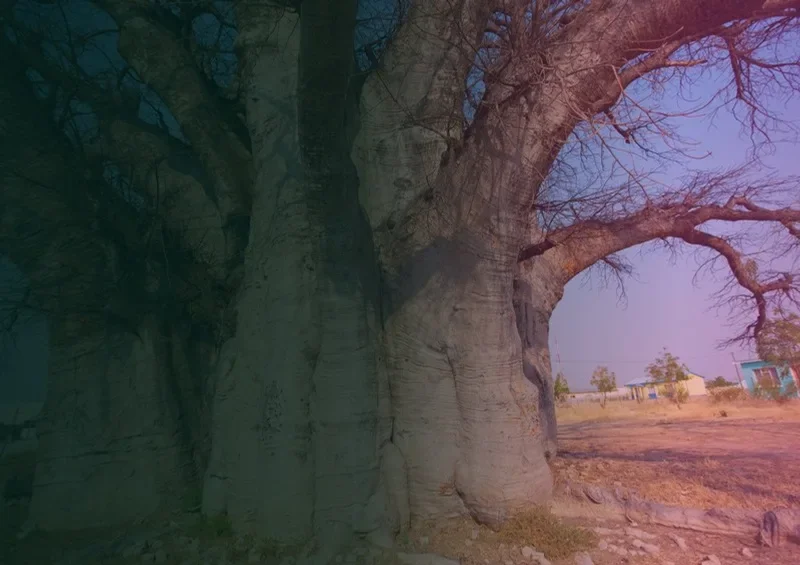
Recovery happens through relationship, because our lives are woven into the same living systems whose future our choices shape.
Download Common Ground
Common Ground
Faith partnerships for nature
Lead authors: Tariq Al-Olaimy, Gopal Patel
Download the report